
Beta
About
Blog
December 14, 2025
Australia Rocks! Why the World Is Watching Its Bold Social Media Move
Australia becomes the first nation to enforce a blanket ban on social media for under-16s, sparking a global debate on child protection and digital wellbeing.
by
Blessing Platinum-Williams
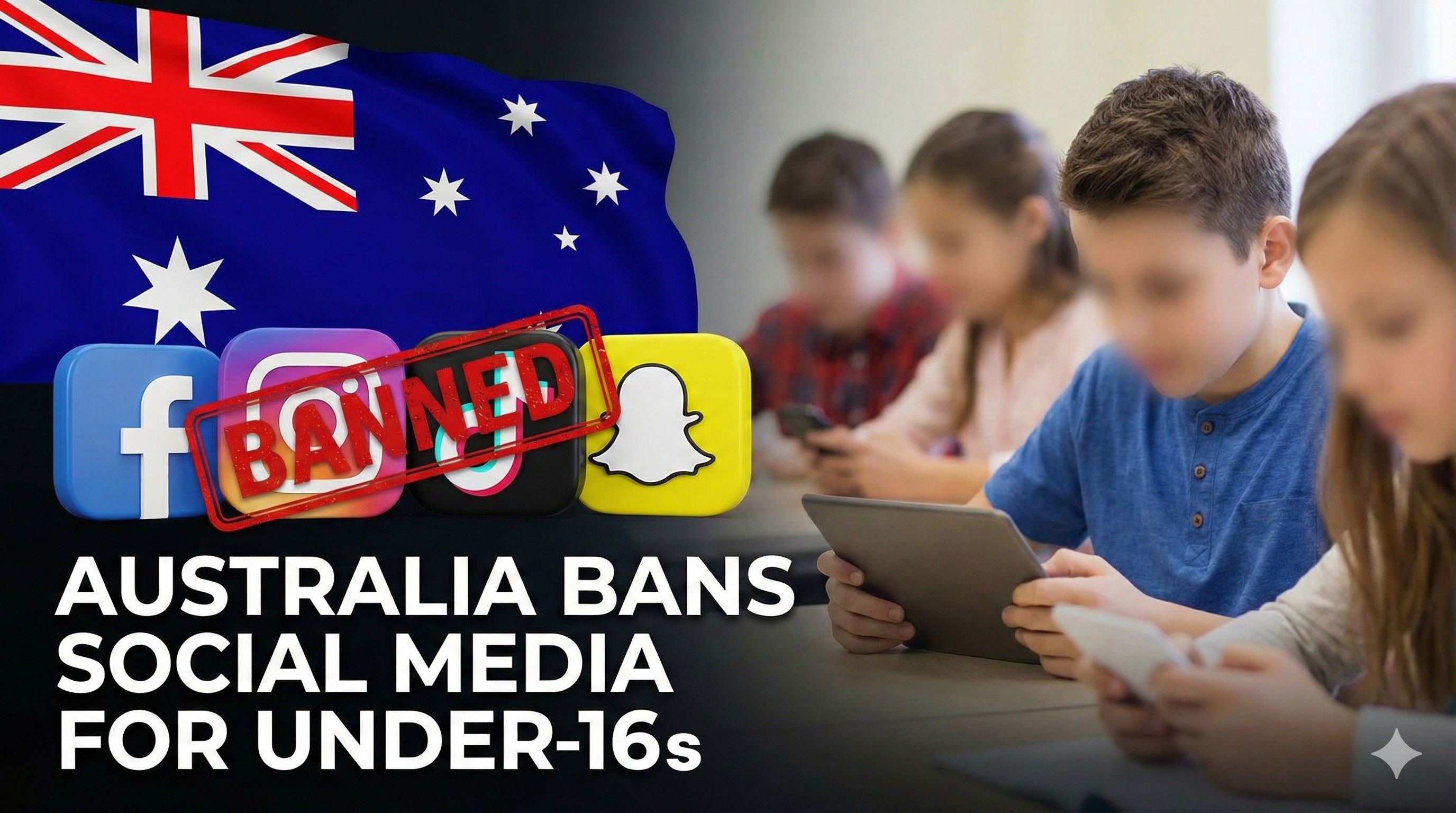
So Australia has recently banned all under-16s from using social media — and honestly, this is huge news. On 10 December 2025, Australia became the first country in the world to enforce a nationwide ban on children under 16 holding social media accounts on major platforms like TikTok, Instagram, Facebook, Snapchat, YouTube, X and more.
Many parents and child-safety advocates are hailing this as a game-changer. And in an age where tech companies optimise for time spent on apps and feeds that grab attention, it’s a bold attempt to pause the harm kids face online.
Talking About Harms That Matter
Social media isn’t just about cat videos and memes — it carries real risks, especially for young minds:
- The illusion of being untouchable: Behind a keyboard, many teens feel invincible. That false sense of anonymity lets them dive into trends, groups or ideologies without the real-world filters that long-form interactions and older mentors provide.
- Indoctrination and radicalisation: Online communities can normalise harmful beliefs faster than parents can notice. Children can be shepherded into extremist narratives before adults even realise what’s happening.
- Cyberbullying and grooming: Persistent harassment, targeted messaging, sexual predation — these aren’t just buzzwords. They’re documented harms that families and psychologists have long been warning about.
- Reckless sharing of personal information: Kids often share pictures, locations, school names and private details without understanding the consequences. That data becomes instantly exploitable.
These aren’t fringe issues — they’re extensive, documented problems, and many parents — like me — choose to keep social media off the table entirely. My children don’t have access to social platforms, and in my household they won’t be getting a smartphone until they’re 18. The internet is a powerful tool, but without maturity and digital literacy, it’s also a minefield.
Australia’s Decision in Context
Let’s step back to what this law actually does:
- It bans under-16s from having accounts on specific platforms: These include big social services like TikTok, Instagram, Facebook, Snapchat, X, Reddit and YouTube.
- Platforms must take “reasonable steps” to block underage users: That includes age estimation techniques like selfie checks, behaviour patterns and opt-in ID uploads.
- Non-compliance could lead to fines up to AU$49.5m: That’s a serious incentive for platforms to actually do something.
- The idea is to protect kids’ mental health, wellbeing and self-esteem: Aussie leaders have compared the shift to past public-health milestones, saying it’s a cultural reset rather than a small tweak.
Not Everyone Is Completely Sold On It
Even though a huge majority of Australians support the ban, it isn’t perfect and isn’t without controversy:
- Technical and enforcement challenges: Some teens have already used fake details or passed age checks to maintain access. That highlights how hard it is to truly stop determined users.
- Legal challenges: Reddit and others are pushing back, saying the law could infringe on freedoms and limit access to important discussions. A case is headed to Australia’s High Court in early 2026.
- Privacy vs protection debates: Critics worry about invasive verification methods and what state-mandated monitoring means for digital privacy.
- Is a ban the best solution? Some experts argue that educating kids and improving safety tools might be more effective than pulling the plug entirely.
This Is More Than Just an Australian Story
Australia’s move is already inspiring debates and policy ideas around the globe:
- Denmark is planning a similar age-based restriction (under-15s).
- In the UK, unions and education leaders are pushing for serious consideration of the idea.
- Malaysia, members of the EU, and other nations are watching closely or considering their own versions of age limits.
Even in the United States, a federal proposal called the Kids Off Social Media Act suggests restricting under-13s and limiting algorithmic content for teens — though it’s still just a bill, not law.
This isn’t just about Australia. It’s a global conversation about how modern societies balance freedom, innovation, mental health and child protection.
What This Means for Parents (and Creators)
Whether or not you agree with the ban, one thing is clear: The internet isn’t inherently safe. It requires skills, awareness and guidance to navigate responsibly.
That’s part of why I created Tonely AI — not as some moral crusade, but as a tool to help people be aware of how their communication lands in a space where nuance and context can easily be lost.
If kids aren’t ready to handle the content, many adults still aren’t fully aware of how their tone can add to misunderstanding or harm in digital spaces.
Tonely doesn’t censor you — it gives you clarity.
So Australia Rocks — But What Comes Next?
Australia’s ban is audacious, controversial, hopeful and imperfect — exactly the kind of policy that forces broader discussions about what we value as a society.
At a time when tech companies chase engagement and profit, countries like Australia are saying:
“Our children’s wellbeing matters more than the bottom line.”
That’s a bold stance — and the world is watching.
Keep Reading
The UK Is Banning Under-16s From Social Media.
The UK’s proposed social media ban aims to enhance online safety by protecting minors from grooming, exploitation and addictive behaviors.
Blessing Platinum-Williams
·
June 15, 2026
Read more

Australia Rocks! Why the World Is Watching Its Bold Social Media Move
Australia becomes the first nation to enforce a blanket ban on social media for under-16s, sparking a global debate on child protection and digital wellbeing.
Blessing Platinum-Williams
·
December 14, 2025
Read more
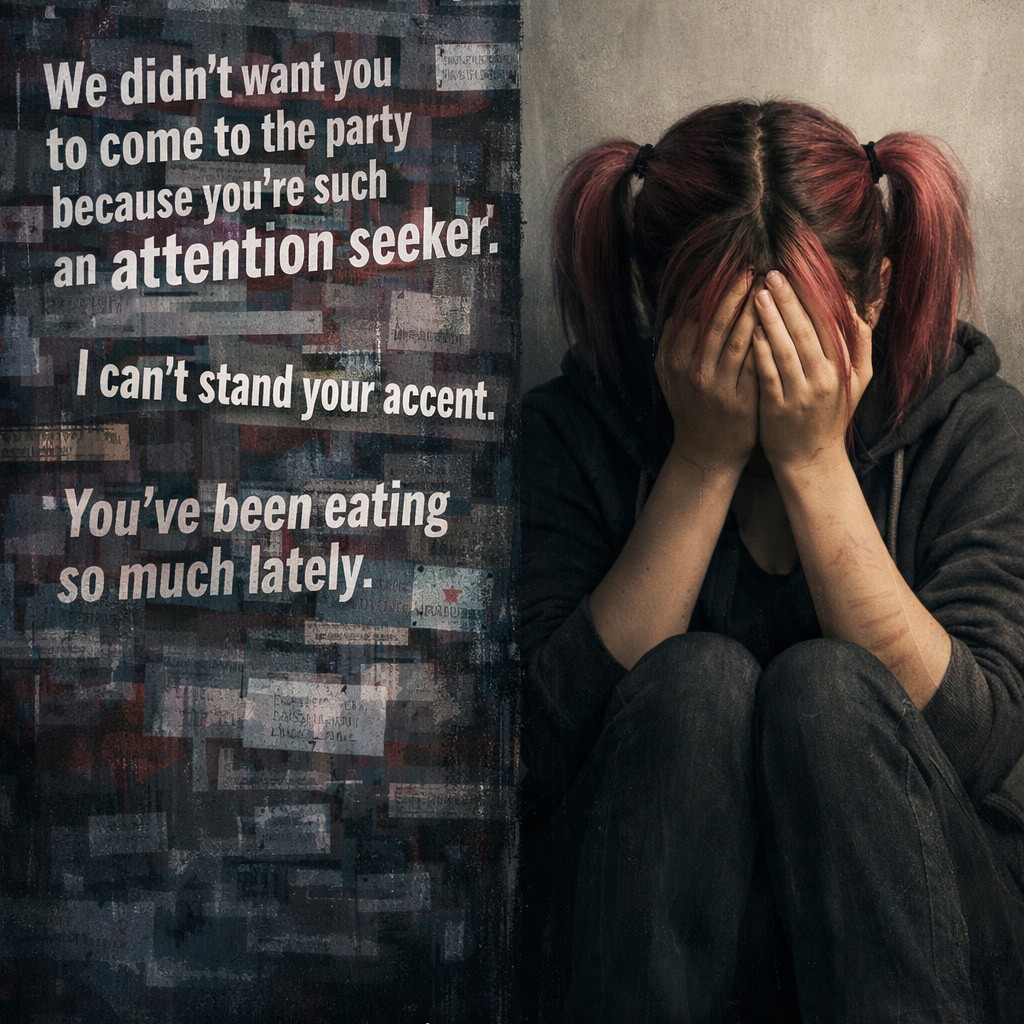
The Quiet Crisis We’re Letting Teenagers Carry Alone
Rising teen self-harm, online bullying and radicalisation are symptoms of a digital culture lacking emotional awareness and reflection.
Blessing Platinum-Williams
·
December 19, 2025
Read more
Works Offline. Private. On-Device.
Your data stays on your device.
Tonely never uploads your messages. All tone detection runs locally in your Chrome browser and on your phone.
Sign up here
Sign up for your free trial and then install the Chrome Extension & Mobile App*


*To use the Chrome Extension and the mobile app, you need to sign up with a Google account.

Not autocorrect. Autoreflect.
Resources
About Us
Press
Support
Contact Us
Give Feedback
Privacy Policy
Terms of Use
Copyright ©2026. Tonely AI Ltd. All Rights Reserved.

Beta
Not autocorrect. Autoreflect.
About
Blog
December 14, 2025
Australia Rocks! Why the World Is Watching Its Bold Social Media Move
Australia becomes the first nation to enforce a blanket ban on social media for under-16s, sparking a global debate on child protection and digital wellbeing.
by
Blessing Platinum-Williams
So Australia has recently banned all under-16s from using social media — and honestly, this is huge news. On 10 December 2025, Australia became the first country in the world to enforce a nationwide ban on children under 16 holding social media accounts on major platforms like TikTok, Instagram, Facebook, Snapchat, YouTube, X and more.
Many parents and child-safety advocates are hailing this as a game-changer. And in an age where tech companies optimise for time spent on apps and feeds that grab attention, it’s a bold attempt to pause the harm kids face online.
Talking About Harms That Matter
Social media isn’t just about cat videos and memes — it carries real risks, especially for young minds:
- The illusion of being untouchable: Behind a keyboard, many teens feel invincible. That false sense of anonymity lets them dive into trends, groups or ideologies without the real-world filters that long-form interactions and older mentors provide.
- Indoctrination and radicalisation: Online communities can normalise harmful beliefs faster than parents can notice. Children can be shepherded into extremist narratives before adults even realise what’s happening.
- Cyberbullying and grooming: Persistent harassment, targeted messaging, sexual predation — these aren’t just buzzwords. They’re documented harms that families and psychologists have long been warning about.
- Reckless sharing of personal information: Kids often share pictures, locations, school names and private details without understanding the consequences. That data becomes instantly exploitable.
These aren’t fringe issues — they’re extensive, documented problems, and many parents — like me — choose to keep social media off the table entirely. My children don’t have access to social platforms, and in my household they won’t be getting a smartphone until they’re 18. The internet is a powerful tool, but without maturity and digital literacy, it’s also a minefield.
Australia’s Decision in Context
Let’s step back to what this law actually does:
- It bans under-16s from having accounts on specific platforms: These include big social services like TikTok, Instagram, Facebook, Snapchat, X, Reddit and YouTube.
- Platforms must take “reasonable steps” to block underage users: That includes age estimation techniques like selfie checks, behaviour patterns and opt-in ID uploads.
- Non-compliance could lead to fines up to AU$49.5m: That’s a serious incentive for platforms to actually do something.
- The idea is to protect kids’ mental health, wellbeing and self-esteem: Aussie leaders have compared the shift to past public-health milestones, saying it’s a cultural reset rather than a small tweak.
Not Everyone Is Completely Sold On It
Even though a huge majority of Australians support the ban, it isn’t perfect and isn’t without controversy:
- Technical and enforcement challenges: Some teens have already used fake details or passed age checks to maintain access. That highlights how hard it is to truly stop determined users.
- Legal challenges: Reddit and others are pushing back, saying the law could infringe on freedoms and limit access to important discussions. A case is headed to Australia’s High Court in early 2026.
- Privacy vs protection debates: Critics worry about invasive verification methods and what state-mandated monitoring means for digital privacy.
- Is a ban the best solution? Some experts argue that educating kids and improving safety tools might be more effective than pulling the plug entirely.
This Is More Than Just an Australian Story
Australia’s move is already inspiring debates and policy ideas around the globe:
- Denmark is planning a similar age-based restriction (under-15s).
- In the UK, unions and education leaders are pushing for serious consideration of the idea.
- Malaysia, members of the EU, and other nations are watching closely or considering their own versions of age limits.
Even in the United States, a federal proposal called the Kids Off Social Media Act suggests restricting under-13s and limiting algorithmic content for teens — though it’s still just a bill, not law.
This isn’t just about Australia. It’s a global conversation about how modern societies balance freedom, innovation, mental health and child protection.
What This Means for Parents (and Creators)
Whether or not you agree with the ban, one thing is clear: The internet isn’t inherently safe. It requires skills, awareness and guidance to navigate responsibly.
That’s part of why I created Tonely AI — not as some moral crusade, but as a tool to help people be aware of how their communication lands in a space where nuance and context can easily be lost.
If kids aren’t ready to handle the content, many adults still aren’t fully aware of how their tone can add to misunderstanding or harm in digital spaces.
Tonely doesn’t censor you — it gives you clarity.
So Australia Rocks — But What Comes Next?
Australia’s ban is audacious, controversial, hopeful and imperfect — exactly the kind of policy that forces broader discussions about what we value as a society.
At a time when tech companies chase engagement and profit, countries like Australia are saying:
“Our children’s wellbeing matters more than the bottom line.”
That’s a bold stance — and the world is watching.
Keep Reading
The UK Is Banning Under-16s From Social Media.
The UK’s proposed social media ban aims to enhance online safety by protecting minors from grooming, exploitation and addictive behaviors.
Blessing Platinum-Williams
·
June 15, 2026
Read more
Australia Rocks! Why the World Is Watching Its Bold Social Media Move
Australia becomes the first nation to enforce a blanket ban on social media for under-16s, sparking a global debate on child protection and digital wellbeing.
Blessing Platinum-Williams
·
December 14, 2025
Read more
The Quiet Crisis We’re Letting Teenagers Carry Alone
Rising teen self-harm, online bullying and radicalisation are symptoms of a digital culture lacking emotional awareness and reflection.
Blessing Platinum-Williams
·
December 19, 2025
Read more
Works Offline. Private. On-Device.
Your data stays on your device.
Tonely never uploads your messages. All tone detection runs locally in your Chrome browser and on your phone.
Sign up here
Sign up for your free trial and then install the Chrome Extension & Mobile App*
*To use the Chrome Extension and the mobile app, you need to sign up with a Google account.
Not autocorrect. Autoreflect.
Resources
About Us
Press
Support
Contact Us
Give Feedback
Privacy Policy
Terms of Use
Copyright ©2026. Tonely AI Ltd. All Rights Reserved.

December 14, 2025
Australia Rocks! Why the World Is Watching Its Bold Social Media Move
Australia becomes the first nation to enforce a blanket ban on social media for under-16s, sparking a global debate on child protection and digital wellbeing.
by
Blessing Platinum-Williams
So Australia has recently banned all under-16s from using social media — and honestly, this is huge news. On 10 December 2025, Australia became the first country in the world to enforce a nationwide ban on children under 16 holding social media accounts on major platforms like TikTok, Instagram, Facebook, Snapchat, YouTube, X and more.
Many parents and child-safety advocates are hailing this as a game-changer. And in an age where tech companies optimise for time spent on apps and feeds that grab attention, it’s a bold attempt to pause the harm kids face online.
Talking About Harms That Matter
Social media isn’t just about cat videos and memes — it carries real risks, especially for young minds:
- The illusion of being untouchable: Behind a keyboard, many teens feel invincible. That false sense of anonymity lets them dive into trends, groups or ideologies without the real-world filters that long-form interactions and older mentors provide.
- Indoctrination and radicalisation: Online communities can normalise harmful beliefs faster than parents can notice. Children can be shepherded into extremist narratives before adults even realise what’s happening.
- Cyberbullying and grooming: Persistent harassment, targeted messaging, sexual predation — these aren’t just buzzwords. They’re documented harms that families and psychologists have long been warning about.
- Reckless sharing of personal information: Kids often share pictures, locations, school names and private details without understanding the consequences. That data becomes instantly exploitable.
These aren’t fringe issues — they’re extensive, documented problems, and many parents — like me — choose to keep social media off the table entirely. My children don’t have access to social platforms, and in my household they won’t be getting a smartphone until they’re 18. The internet is a powerful tool, but without maturity and digital literacy, it’s also a minefield.
Australia’s Decision in Context
Let’s step back to what this law actually does:
- It bans under-16s from having accounts on specific platforms: These include big social services like TikTok, Instagram, Facebook, Snapchat, X, Reddit and YouTube.
- Platforms must take “reasonable steps” to block underage users: That includes age estimation techniques like selfie checks, behaviour patterns and opt-in ID uploads.
- Non-compliance could lead to fines up to AU$49.5m: That’s a serious incentive for platforms to actually do something.
- The idea is to protect kids’ mental health, wellbeing and self-esteem: Aussie leaders have compared the shift to past public-health milestones, saying it’s a cultural reset rather than a small tweak.
Not Everyone Is Completely Sold On It
Even though a huge majority of Australians support the ban, it isn’t perfect and isn’t without controversy:
- Technical and enforcement challenges: Some teens have already used fake details or passed age checks to maintain access. That highlights how hard it is to truly stop determined users.
- Legal challenges: Reddit and others are pushing back, saying the law could infringe on freedoms and limit access to important discussions. A case is headed to Australia’s High Court in early 2026.
- Privacy vs protection debates: Critics worry about invasive verification methods and what state-mandated monitoring means for digital privacy.
- Is a ban the best solution? Some experts argue that educating kids and improving safety tools might be more effective than pulling the plug entirely.
This Is More Than Just an Australian Story
Australia’s move is already inspiring debates and policy ideas around the globe:
- Denmark is planning a similar age-based restriction (under-15s).
- In the UK, unions and education leaders are pushing for serious consideration of the idea.
- Malaysia, members of the EU, and other nations are watching closely or considering their own versions of age limits.
Even in the United States, a federal proposal called the Kids Off Social Media Act suggests restricting under-13s and limiting algorithmic content for teens — though it’s still just a bill, not law.
This isn’t just about Australia. It’s a global conversation about how modern societies balance freedom, innovation, mental health and child protection.
What This Means for Parents (and Creators)
Whether or not you agree with the ban, one thing is clear: The internet isn’t inherently safe. It requires skills, awareness and guidance to navigate responsibly.
That’s part of why I created Tonely AI — not as some moral crusade, but as a tool to help people be aware of how their communication lands in a space where nuance and context can easily be lost.
If kids aren’t ready to handle the content, many adults still aren’t fully aware of how their tone can add to misunderstanding or harm in digital spaces.
Tonely doesn’t censor you — it gives you clarity.
So Australia Rocks — But What Comes Next?
Australia’s ban is audacious, controversial, hopeful and imperfect — exactly the kind of policy that forces broader discussions about what we value as a society.
At a time when tech companies chase engagement and profit, countries like Australia are saying:
“Our children’s wellbeing matters more than the bottom line.”
That’s a bold stance — and the world is watching.
Keep Reading
The UK Is Banning Under-16s From Social Media.
The UK’s proposed social media ban aims to enhance online safety by protecting minors from grooming, exploitation and addictive behaviors.
Blessing Platinum-Williams
·
June 15, 2026
Read more
Australia Rocks! Why the World Is Watching Its Bold Social Media Move
Australia becomes the first nation to enforce a blanket ban on social media for under-16s, sparking a global debate on child protection and digital wellbeing.
Blessing Platinum-Williams
·
December 14, 2025
Read more
The Quiet Crisis We’re Letting Teenagers Carry Alone
Rising teen self-harm, online bullying and radicalisation are symptoms of a digital culture lacking emotional awareness and reflection.
Blessing Platinum-Williams
·
December 19, 2025
Read more
Works Offline. Private. On-Device.
Your data stays on your device.
Tonely never uploads your messages. All tone detection runs locally in your Chrome browser and on your phone.
Sign up here
Sign up for your free trial and then install the Chrome Extension & Mobile App*
*To use the Chrome Extension and the mobile app, you need to sign up with a Google account.
Not autocorrect. Autoreflect.
Resources
About Us
Press
Support
Contact Us
Give Feedback
Privacy Policy
Terms of Use
Copyright ©2026. Tonely AI Ltd. All Rights Reserved.